Showing posts with label Tech. Show all posts

Saturday, May 2, 2026

六合彩:刀仔鋸大樹

今天的六合彩投注額已達 4 億港元,距離開獎還有兩小時。

眾所周知,六合彩是典型的「刀仔鋸大樹」遊戲,每注中獎機率僅為 13,983,816 分之一(一千四百萬分之一),本質上是給小市民買個希望而已!簡單來說,就算買了 N 注完全不同的組合,中獎機率都只是 13,983,816 分之 N!

但科學點來看,我們能否把這把「刀仔」磨得稍微鋒利一點呢?

首先,在有限的 N 注中,盡可能涵蓋所有 49 個號碼。每注 6 個號碼,若號碼完全不重複,8 注可涵蓋 48 個號碼;增加至 9 注則能確保 49 個號碼無一遺漏,最後一注雖有重複,卻僅稍微提升了勝率。

現在,可以肯定 6 個「攪出號碼」必會落在上述的 9 注當中(特別號碼暫且不論)。當然,這距離中獎依然非常遙遠,最低限度都要 4 個「攪出號碼」同時落在同一注項中才有機會獲派獎金。事實上,6 個「攪出號碼」極大機會散落在不同注項中,導致顆粒無收。所以,若想進一步提升勝算,可採取「多重覆蓋策略」,即重複上述 9 注的佈陣,但確保每組號碼配置各不相同。依此類推,購買 18 、27、36 或更多注,策略上確保相對均勻涵蓋 49 個號碼,購買多少就取決於你想花費多少來買這個希望。(其實,更接近平均涵蓋 49 個號碼的方案只需要 17 注,頭 9 注跟上述做法一樣;然後,將第 9 注的 5 個隨機號碼從 49 個號碼中移除,即剩下 44 個號碼,這 44 號碼只用過一次。如果把這 44 號碼再用一次,則全部號碼都用了兩次。現在,用多 8 注可以覆蓋 42 個,僅餘 2 個未有使用兩次。)

純屬娛樂,不妨買個 18 注(花費 180 港元)試試手氣吧!雖然在巨型大樹面前,這點努力依然微不足道,但至少你的刀鋒已比其他隨機旁人銳利了幾分。


2026年5月2日 19:00

Sunday, June 2, 2024

Are we destroying our own present and past with cloud storages?

Documents written on traditional media such as paper or engraved on stones have proven to withstand the test of time, allowing knowledge to be preserved for thousands of years. These physical artifacts have served as essential sources of information about the past, ensuring the transfer of knowledge to future generations.

However, with the advent of technology, the concept of a "paperless" archive has gained prominence. Cloud storage has emerged as a stable and reliable method of storing various types of records, ranging from temporary to permanent or archival, in professional, industrial, business, and personal applications. The digitization of academia has been underway for over a decade, resulting in a swift decline in printed papers. Many archival journals and proceedings are now exclusively published and maintained on cloud servers. One thing for sure is that these cloud storages consume a huge amount of energy and will expand at an exponential rate!

My question is whether these cloud storages will endure for a thousand years. We may foresee that all digital archives would theoretically vanish in a scenario where power is depleted. However, even in a future where energy becomes scarce, human civilization may continue in ways that are beyond our imagination. But then, people have no clue as to what their ancestors had done! In such a future, the existence of archived media that does not rely on mandatory energy supply would prove invaluable and perhaps would be the only source that remains accessible to future generations. 

Let's think about it! With cloud storage replacing printed media, we are destroying our only tangible links to the distant future though it may sound too remote for people to be worried about at the present time! Two thousand years later, whether we will have enough power to maintain such an enormous amount of information is questionable, or are we destroying our own present and past?

June 3, 2024


Sunday, May 26, 2024

新能源汽車產業的收場

經濟學101的基本供求關係,由市場控制,供多了就要降價,求過於供則價格得以提高。澳洲的農夫寧願把過剩的農產品掉進垃圾桶也不願推出市場售賣,他們集體行動,誰都不能破壞規矩。能保持高價是對生活質素的保障,把價錢做爛了就只有白做。中國人喜歡自己顧自己,你不賣我賣,你出價10元,我就賣9元搶客。同一理念,政府帶頭影響國際市場。自2010年,中國高額補貼電動車生產商,一輛續航力達250公里的純電動車,國家給60000元補貼,續航力只有80公里的,也有35000元補貼。地方政府也有補貼,插電混合動力車4800元,純電動車12600元。結果是不少汽車企業加入,以吃大茶飯的心態,大量製造低續航力的廉價電動車,製造商拿了政府的補貼後,再以另一家公司購回,換取地方政府補貼。市場根本消化不下,加上疫情後需求大幅下滑,最終大量電動車堆在空地上。

歷史重演,中國曾經為了發展半導體、通信等產業,投放不少資源並推出大額項目支持相關行業,但時至今天,中國還未能在半導體產業上取得領先地位。過去十年大力推動新能源汽車產業發展,重蹈覆轍,務求擺脫先進國家的牽制。從數字看來,這次中國的確很成功,去年外銷汽車522.1萬輛,其中120.3萬輛是新能源汽車,成為世界之冠。但是,從2016年到2022年中國政府補貼新能源汽車至少570億美元(Alix Partners報告指),如此巨額補貼是中國新能源汽車能以低價取勝的關鍵。長遠來看,這種銷售策略必會成為行業最大的發展障礙。當越來越多企業投入競爭,加上市場的庫存壓力,自然引發價格戰,內地媒體以「血拚」來形容現時由比亞迪掀起的價格戰。中國100多家生產商,相信不少聞所未聞。內需難以消化龐大的產能,外銷是唯一出路,不難估計結果將是自相殘殺,同時禍及國際企業,對中國的經濟長遠發展起不了正面影響。

中國補貼的問題不單在新能源汽車產業上出現,航空業也如是。澳洲於2016年取消了限制來往中國與澳洲的航班數量的相互協議,意味著兩國旗下來往中澳的航班無需在數量上維持對等。中國東航背後有國家支持,票價可以降至澳航無法抵禦的水平,最終迫使澳航取消了最繁忙的上海悉尼航線,澳航稱該航線的搭乘率只達50%。跟電動車產業一樣,都是直接或間接由政府補貼,以國家的資源來與外企競爭,取得一時的勝利。問題是中國的企業能否長期依賴補貼來維持競爭力呢?換另一個角度看,是誰的錢補貼了誰的生意?BMW、Mercedes、Posche 是靠什麼建立在行業的領導地位? LV、Chanel 那些名牌又是靠什麼來長期吸引顧客呢?


2024年5月26日


Saturday, December 30, 2023

Lifestyle Game Changers in the Past 5 Decades

When contemplating the most impactful inventions that have reshaped lifestyles worldwide over the past half-century, it is difficult to dispute that the Internet, emerging in the 1970s and gaining widespread popularity in the 1980s, stands as the unequivocal pioneer. Its advent brought about a paradigm shift in the way we interact and communicate. Nowadays, the practice of sending physical letters or Christmas cards has become a rarity.

Then, in the 1990s, a remarkable development unfolded with the emergence of Facebook, masterminded by an MIT graduate Mark Zuckerberg. This groundbreaking platform revolutionized the way individuals, communities, and businesses connected with one another. As a result, the world witnessed an unprecedented proliferation of social media platforms that forever changed how information impacted people's actions and decisions. 

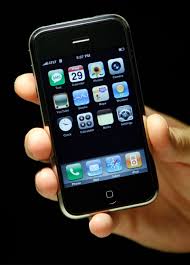
In 2007, Apple made a groundbreaking announcement - the iPhone. This revolutionary device completely transformed the world of personal portable communication. Not just a mobile phone, the iPhone introduced the concept of Apps, which in turn revolutionized entertainment and creative work distribution. It had a profound impact on the business landscape, leading to the demise of traditional models while opening up a multitude of new opportunities.

In the 2010s, Tesla revolutionized the electric vehicle industry, bringing about a surge in popularity. Prior to Tesla's emergence, electric vehicles were largely unappealing, and despite governments' attempts to encourage the adoption of green transportation, advancements were minimal. Tesla, however, successfully transformed the perception of electric vehicles through their introduction of impressive long-range capabilities, innovative designs, autopilot systems, and user-friendly interfaces.

Finally, in November 2022, a remarkable milestone was achieved when OpenAI introduced its revolutionary Large Language Model (LLM) chatbot application, CHATGPT. Within a mere five days, this innovative creation managed to captivate the interest of over one million eager users. Astoundingly, within just three months, its user base soared to an estimated 100 million individuals. The CHATGPT is no ordinary chatbot; it possesses the ability to provide insightful responses and analyze information in a manner strikingly reminiscent of human thought. As a result, it has become a game-changer, altering the lives of people across all professions and industries.

It is worth noting that all of these game changers were invented by Americans, with some originating from small business startups. This naturally prompts the question: What is it about Americans that fosters such creativity and enables them to have such a profound and far-reaching impact on the world? Would it be an environment of openness, general respect of diversity, unrestricted flow of information, and the freedom to think and talk?


December 31, 2023


Saturday, September 11, 2021

Rogers LS3/5A still the best choice

BBC originally designed the LS3/5A as a studio monitor speaker, and the shoebox size loudspeaker produces impressive sound and has become the best mini loudspeaker in the world despite being a bit pricy, which is understandable as BBC is still imposing a 10% levy from each and every pair sold.

I bought my first pair of Rogers LS3/5A back in 1992, and it fit perfectly in my midget home. Partnering with ROTEL's pre-amp and power amp, the baby loudspeakers have kept making all my friends feel astonished how dramatic yet clean and clear sound could be produced from the small walnut wood boxes. The vocals were the most natural and the midrange was sublime. Compared to my old AR94 which was big and any other model I have listened to, this small British-made loudspeaker has cut the mustard in its brilliant midrange and stereo imaging, except for the very low-range as limited by its woofer size. But I am not a fan of sub-bass or synthesized sounds, and definitely don't feel a loss with less intense bass.

In recent years, my Rogers seemed to begin to lose its magic, and after rounds of primitive tests including replacing cables, trying out different versions of recordings, and eventually installing a new Roksan Blak amplifier which I was told can support the Rogers fantastically, all didn't seem promising!

A psychological unshakable assumption must have prevented me from thinking in terms of the speakers themselves. For years, I kept exploring new suspects, including my own ears. Eventually, I asked my son if the speakers sounded strange to him, and his response resolved all the puzzles. He said he thought I knew they were bad! Then I realized they had aged, and nothing can revert it.

So, I bought a new pair of the exact same Rogers LS3/5A in walnut wood. The moment they got connected up, the first batch of notes from Yoyo Ma's Bach Cello Suites was lively and real, with the low-side midrange sound of the amazing evenness of Ma's playing filling the room. You simply couldn't stop listening until the very end. Then, I switched to Latin American jazz. The vibrant and democratic collaborations of piano, trumpets and drums were all right in front of me, with every instrument so awesomely distinguishable, and again real!

Thank God! All my favourite music, from classic, jazz, to Jacky Cheung's, has now returned!

September 12, 2021

Saturday, March 16, 2019

What happened to the Boeing 737 Max 8 ?

Two Boeing 737 Max 8 jets crashed within 6 months.1 Several basic facts have recently emerged, which prompted authorities to ground this new variant of the popular Boeing 737 airliner. While more investigations would be needed to identify the detailed causes of the deadly crashes, the several basic facts collected so far already permit a crude mural to be drawn up for the likely events that might have taken place in the cockpits of the Boeing 737 Max 8 jets right before they went down.

In order to see how a control system typically fails, one needs to understand the way a closed-loop system works and the inevitable hazard of oscillation. In laymen terms, any closed-loop system is prone to instability when the control efforts and the feeding of sensing signals fail to work in harmony. For instance, when you're listening to music while adjusting the volume of the speakers or airpods, you're controlling a closed-loop system. If you feel the sound being too loud, you attempt to turn the volume down. This is a typical feedback action, creating a closed loop. But if you react too slow and too drastic, the volume goes too far down, and after some delay the sound becomes too soft to be heard. Then, you would turn the volume up again, and if you do it a little too drastic, the volume gets too far up after a typical delay. Attempting to turn the volume down again repeats the process, and creates an oscillation. The situation for the Boeing 737 Max 8 crashes could be made more complicated by an apparent but "unintended" two-loop control.

Facts

  1. The satellite track data of the Boeing 737 Max 8 crash last October in Indonesia and the crash earlier this month in Ethiopia consistently show typical oscillatory transients leading to the crashes.
  2. The pilots of both flights had struggled to save the aircrafts for a period of time before the aircrafts crashed.

Likely Events

First, the new automatic MCAS system (Maneuvering Characteristics Augmentation System) on the 737 Max 8 works on a typical feedback principle to prevent the jet from getting into a stall2. Basically, it senses the so-called angle-of-attack (AOA) and commands the aircraft's nose to dip down to prevent a potential stall. However, the operation of this new MCAS may not be clearly known or understood by the pilots who have flown the conventional Boeing 737 jet for many years and would do the nose control in the usual way.

The problem is that the 737 Max 8 allows the pilot to intervene while its MCAS works to fix the same problem, creating a double-loop control situation. The AOA signal causes both the pilot and the MCAS to react, but with different speed and effort (technically called closed-loop bandwidth and gain).

The nose control overshoots and AOA continues to feed signals back, and always with delays of different magnitudes (even different orders of magnitude as human and machine do react quite differently). This might create an oscillatory response, as revealed by the satellite track data, in which the aircraft repeatedly climbed and descended under the two separate (pilot's and MCAS's) control actions.

The Deadly Event

The two-loop continues to work and creates an oscillatory response. In theory, this is fine as long as every parameter remains constant, and the loop gains are controlled precisely to maintain sustained oscillation within a safe range! But multiple factors may cause something to happen in a fatal way.

  1. The human pilot, who is the controller of one of the loops, cannot repeat his action precisely every cycle even though all other parameters are perfectly constant.
  2. External factors like wind speed and direction may introduce disturbances to the system that cannot be reacted precisely by the human pilot, especially since sustained oscillation normally requires irregular control effort (technically called nonlinear gain control).
  3. The human pilot loses control and fails to follow the oscillatory pattern. In order for the aircraft to diverge its altitude, the gain and bandwidth of either loops must have drifted to the unstable region causing the aircraft to lose stability and eventually go down under the force of gravity.

The above description is a very general control scenario, often described in elementary control engineering texts. To know the exact causes, we need to fill in a lot more technical details, likely different sets of details in the two crashes, which can only be unfolded through examining the detailed flight data.


March 16, 2019


_____________________

1 Ethiopian Airlines, Lion Air crash linked by new evidence — New York Times (March 15, 2019)2 Stall — An aircraft normally flies horizontally, and may climb up or descend at an angle within a certain limit. When the aircraft goes too steep up, its wings no longer provide the needed upthrust and the aircraft continues to move up almost vertically and surely loses speed under gravity. It soon stops as it reaches a peak altitude, which is called a "stall", and then drops rapidly under gravity. After the stall, the engines are not powerful enough to restore normal flying given the heavy weight of the aircraft, and disaster is inevitable. Modern jets usually have sophisticated control systems to prevent a potential stall.

Tuesday, September 25, 2018

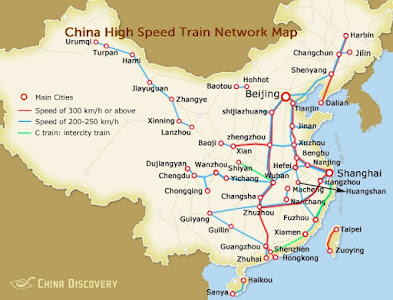
How network science assesses Hong Kong's high speed railway?


On September 23, 2018, Hong Kong celebrated the opening of its high speed railway that has been described by government officials as the most beneficial infrastructure project for Hong Kong.1 The $11 billion dollar project indeed provides an alternative mode of travel to major cities in the Chinese Mainland, and according to the government's prediction is expected to hit a daily passenger volume of 80,000 (which was recently downward adjusted). The question, however, is whether it really justifies the huge construction cost and the subsequent expensive maintenance cost.

Network science, a rapidly growing discipline in physics and mathematics, may shed light on the pros and cons of Hong Kong's high speed railway as a means for connecting with the rest of China. A railway system is a network, which is characterized by a set of so-called nodes connected by links. For a railway network, a station is a node, and its importance may be measured by a few parameters, among which the "degree" of a node is often used to assess its connectivity. In non-technical terms, the "degree" of a station is just the number of other stations it connects immediately with. A high-degree station is what we normally refer to as a hub, like Shinjuku in Tokyo, King's Cross St Pancras in London, or Wuhan in China. Obviously, a hub will always attract a large volume of traffic as it radiates and connects to multiple nodes. In a railway network, the majority of nodes has a degree of two, connecting only two neighboring nodes. A few, however, has a high degree.

According to the latest railway map2,

  • Degree of Guangzhou = 7 (double links counted as 2)

  • Degree of Shenzhen = 5

  • Degree of Hong Kong = ?


How about Hong Kong? It has the least degree, i.e.,
one, as it is situated at the end of a line. Unless such a node has other fundamental attributes that make it more important than others, it cannot be an important node from the network's point of view. In network science, the so-called weight of a node may make it more important, like the points-of-interest, population size, social activities, financial activities, etc. Hong Kong, being a Special Administrative Region, may have a heavier weight, but the Hong Kong high-speed railway station is topologically a terminal node and can never serve to connect others. This remains a fundamental constraint, unlike Hong Kong's airport which has been developed to be a hub. The key point is that the railway system, restricted by topology, cannot allow any station to develop into a hub if it was not designed for such a function.

Hong Kong is a one-degree node connecting permanently with an intermediate Futian station which then connects to Shenzhen North station, and that's it. Theoretically, the topological efficiency (node's) is also inherently low as it is located on one single route and right at its terminal. Other network attributes will also consistently rate Hong Kong's station as a less important node, e.g., the so-called betweenness centrality that reflects a node's ability of carrying passengers through it from various possible itineraries.

Hong Kong as a terminal station in the high-speed rail system is an inherently unimportant node. The high-speed railway is expected to play a very limited role as a means of transportation. Simply put, it connects only to Shenzhen, through which to other nodes serially (along one-dimensional lines). Under the current topological constraints (i.e., HKSAR being a boundary point, without through traffic), Hong Kong's high-speed rail has no room for further development. A literal dead-end so to speak!

September 26, 2018

Thursday, August 9, 2018

Can nouveau riche sustain iPhone's success in China?

The Apple iPhone has always been the most expensive smartphone in the market. Last year, its price shot up to USD 999. Before the launch of iPhone X in September last year, market analysts were highly skeptical about the sales of this expensive product, especially in the China market. That's common sense! Who would buy a smartphone which is literally 5 times more expensive than a reasonably performing competing product? The reality, however, proved all analysts wrong!

Apple iPhones still topped all smartphones in China in terms of sales revenue, though it ranked fifth in terms of quantity sold, behind Huawei, OPPO, VIVO and Xiaomi. Obviously, Apple earned more money than any of its competitors because its products were a lot more expensive. From the viewpoint of strategy, Apple has obviously been super successful in positioning itself above its competitors, and as long as it remains superior in the hearts of its fans, it will continue to succeed. The point is that, unlike its Chinese counterparts, Apple never aims to sell more at cheap price. Instead, Apple sells less but at a much much higher price!

The China market is clearly highly uneven and plagued by upstart mentality. As long as there are enough nouveau riche who love Apple because it's not cheap, Apple can continue to shoot up prices to offset the shrinking market share1. Apple has already verified this strategy in 2017. Should Tim Cook see the intensifying upstart mentality of Chinese fans, iPhone prices will continue to escalate. Of course, the more rational global market would disrupt this strategy to some extent. The question is where and when an equilibrium be reached under the influence of the highly skewed China market.


August 9, 2018

_______________ References:

1 Apple grew 32% YoY in China's shrinking phone market due to "strong performance of iPhone X" — Daniel Eran Dilger (April 2018)

Recent Popular Post