Showing posts with label Travel. Show all posts

Monday, April 27, 2026

公民意識與維權

一名中國女子在亞航(Air Asia)飛機上鬧事,網上瘋傳,引起各路鍵盤英雄熱論。 女子在飛機準備起飛時在機艙內用手機大聲通話,令相鄰乘客感到不滿,隨後雙方爆發爭執,馬籍服務員試圖介入勸解。由於服務員不懂中文,女子遂大發雷霆,要求馬籍服務員講中文,並高聲叫囂「我是CHINA!講中文!」她激動地斥責服務員「你一直跟我飆英文!我是CHINA!你們竟連基本中文都講不明白!是什麼國際航班呀!」其後,該女子被航警強帶離機,航班最終延誤一個多小時。

從整段視頻中可以看出,這次爭執所折射出的是缺乏「公民意識」以及對個人權利的過度強調。類似情況其實在現今中國社會中並非罕見,部分人往往將自己的權利無限擴大,同時漠視客觀環境和其他人的處境(如在公眾場所,別人也有同等權益),尤其是在身為顧客時,覺得誰也應該服從自己的要求。當然,事件也反映了該女子個人的無知、自私,無視其他乘客權益的態度,將自身利益凌駕於公共秩序之上。這事件也代表社會價值觀的扭曲,我是消費者,我有錢,我最大,不管任何情況,都要令我感到滿意才是。記得去年陳奕迅在澳門的演唱會中,部分觀眾不滿他講粵語,高聲叫囂「講普通話!」他們彷彿忘記了陳奕迅是粵語歌手,澳門是粵語地區,講粵語理應是意料中事。從商業角度來看,歌迷是自願買票,而非被逼消費,不喜歡陳奕迅就不要來了;既然來了,聽不懂也得尊重在場的其他歌迷,沒必要令主人家尷尬!

深入思考,造成價值觀的扭曲,可能是源於教育和社會環境。當教育方針過於強調國家的強大,容易導致部分人形成一種自大的心態,極端點的就變得目中無人、為所欲為。另一方面,近年的社會環境也令很多人失去了應有的互信,反而趨向偏執地維護自身的利益,甚至對他人懷有防範心理。該女子所說的「我有什麼錯?」「你要賠償我!」「你今天不能給我一個合理的解釋,所有人都別飛喇!」正是這種信念的具體表現。


2026年4月28日


Sunday, July 9, 2023

星加坡「麗英黃梨撻」

記得十多年前,一位星加坡好友介紹了他家鄉的「麗英黃梨撻」給我,第一次品嚐已難以忘懷。「黃梨撻」在香港和台灣被稱為鳳梨酥,嚐過「麗英」的鳳梨酥後,徹底改變了我對鳳梨酥的看法。

鳳梨酥通常是用豬油製成的外皮包裹著冬瓜或冬瓜混合菠蘿的餡料,由於餡料主要成分是冬瓜,因此一般不會期望鳳梨酥帶有真正菠蘿味道。直到在台灣嚐過「微熱山丘」的新派鳳梨酥後,才開始對鳳梨酥有所改觀。

星加坡的「麗英黃梨撻」卻有其獨特風味,因為需要考慮到穆斯林的需求,星加坡一般不會使用豬油,因此牛油皮成為「麗英黃梨撻」與其他鳳梨酥的明顯區別。餡料是主角,少甜多酸的真實菠蘿風味,完全顛覆了我對鳳梨酥的刻板印象。

上星期有機會重回星加坡,務必找到麗英,幾經艱苦,最終在MacKenzie小街找到了這家隱蔽的店鋪,期待著重拾極品鳳梨酥的美味。回到香港後,打開塑料盒,牛油皮的香氣四溢,一口咬下,味道依然如故,仍然是我記憶中的酸甜鮮果風味,再配上一杯濃縮咖啡,超正!

2023年7月10日

Saturday, June 3, 2023

Cathay scandal, out of proportion and out of context!

Can anyone make sense of blaming an entire airline company, or even labeling it as "Hong Kong's shame," for a mistake made by only three cabin crews out of a staff of more than 20,000? Does this one error truly justify such severe condemnation of the company's staff training?  Our Chief Executive certainly seems to think so, as he made his open condemnation of the three crew members, but let's not forget that just a month ago, our Security Chief cautioned the public against exaggerating or generalizing the actions of a small group of badly behaved police officers.

Moreover, let's be clear: the supposed "mistake" made by the three cabin crews is not technically a mistake at all. It was merely a private conversation among colleagues that unfortunately got overheard by an eavesdropper with a recording device. Sure, it may have been a display of poor work ethic, bad behavior, and even downright stupidity, as it happened in the workplace! Think about it this way: if two waiters in a restaurant were to talk trash about their customers, would that be considered wrongdoing? Nope, they have the freedom of speech. But of course, it's not exactly professional to do so in front of customers who might overhear. Let's not pretend like this kind of thing doesn't happen in other professions too. I mean, have you ever heard doctors or teachers privately discussing how dumb their patients or students are? It's not exactly uncommon.

Apparently, some people in the government and media just had to blow this whole thing out of proportion and act like it's the end of the world. It's almost like they're trying to prove their loyalty to their Chinese superiors. Would they act this way if the situation were reversed? Doubtful.

It's a shame that Hong Kong seems to have lost its sense of fairness and rationality. Can we all just take a chill pill and realize that not every mistake deserves a public shaming?


June 3, 2023


Wednesday, December 28, 2022

Japan tops the most likeable country list!


Since Japan reopened to foreign visitors, it has been on the top of the priority list for the starved tourists all over Asia. Over 90% of Hong Kong people have put Japanese cities as their first and preferred destinations. 
The likeableness of Japan is self-evident, as thousands have rushed to pack their luggage for a Japanese holiday since October. Tokyo, Osaka, Kyoto, Nagoya, Sapporo, Fukuoka, ..., are all on the booking list. Airlines have been resuming flights to Japanese cities as first-tier destinations, amidst the slowly recovering flight capacity. Other Asian cities apparently don't get a proportionate share! 

As a post-pandemic observation, countries having this level of charm do reflect a cultural strength and soft power that took years to build. The variety of attractions Japan offers is amazing, from beef rice bowls to fine omakase dining, concert halls to vinyl cafes, designer brands to vintage, city walk to natural scenic hike, homestay to hot spring resorts, and general to subcultural interests, all representing a very unique destination for visitors with different interests. More importantly, Japanese society is generally admired by visitors for being polite, patient, friendly, fair, and subtly sophisticated. The many small details, which people could hardly recall one by one, have added up to make people feel the comfort and peace of mind, including the friendly facilities, the aestheticity of Japanese design, advanced yet subtle technology, clean and calm environment, the feeling of safety, etc. You don't get to see people shout in subways or dance with noisy loudspeaker music in parks or public squares!

It's interesting to probe a bit into what makes a country so likeable, or on the contrary so unlikeable! After the three years of the pandemic, we clearly see the differences and find part of the answers being rooted in the way a country is run, how people are educated and what values they hold. 


December 28, 2022

Friday, August 16, 2019

Faith in Mongolia

The idea of a pilgrimage to Mongolia, when first told by my friend Paul, sounded like an extended retreat in a country full of grass prairie and with sufficient fun! After all, apart from attending masses and perhaps helping out a bit in some local Catholic youth centers or schools, I could have plenty of time to see the beautiful Mongolian prairie and explore the proud history of this very special country which bred the world's greatest hero Chinggis Khan.


I had absolutely no idea how Christianity was being treated by the Mongolian authority, and thought it was like in Hong Kong where freedom of religion can be taken for granted. Before departure, the pilgrimage group met up for a briefing and everyone was given some "kids' stuff" (like stationeries, books, candies, toys, etc.) to be carried to Mongolia. This was the first official task each member was supposed to perform. Clearly, these things must be relatively scarce in Mongolia, and we were the couriers! I happily accepted the task knowing this was the first little good thing I could do for the needy!

Every day in Ulaanbaatar was a surprise! The fathers and sisters there were doing all they could to help the locals, like running special schools and youth centers, but without saying a single word of their religious belief. They were simply prohibited to preach, and could actually get into trouble if they were caught attempting to teach the Bible openly. Parish churches do exist, but they only conduct religious activities within the premises. Every day, we held our own mass within our own group at different churches, chapels and even on the Töv prairie (Gorkhi-Terelj National Park). Churches are simple, and could even be a Mongolian ger!

After a few days in Mongolia, I started to appreciate the power of demonstrating your belief rather than preaching directly. Longer I stayed and more I observed from the work of the Catholic priests and sisters here, more I got convinced that if you live your life as a Catholic, people look at you as a Catholic and judge what you do and how you treat people, and you don't need to hard sell the words of Bible, yet you can touch people's heart and make a difference to the beneficiaries. That's my biggest gain in this pilgrimage! I met a few missionaries who devoted their lives to serving the community here. Though they spoke nothing about Bible, they impressed the Mongolians they served positively by what they did. Their sacrifice, love, and hard work all spoke loud and clear about Catholic belief, and that was million times more effective than reading out the Bible texts to the people!


August 16, 2019

Tuesday, May 21, 2019

「一地兩檢、逃犯條例」— 你究竟害怕什麼?

去年的「一地兩檢」、今年的「逃犯條例修訂」弄得立法會一團糟!沒錯!香港人對大陸的執法方式和司法制度存有戒心,故對在香港境內設立內地執法區懷有恐懼之心,實在不難理解。同樣道理,移送疑犯返回大陸受審,港人聞風喪膽,實屬正常。

理性一點,在西九高鐵站內設立內地執法區,就只有乘坐高鐵前往內地的旅客才會受到影響。若然你不打算往大陸,哪來西九高鐵站幹什麼?事實上,如果你選擇乘高鐵往大陸,一地兩檢只會減省你在兩邊口岸區所需的檢查時間。若然你永不踏足大陸的話,那乜地乜檢又與你何干?

「逃犯條例修訂」亦如是,假若你從來沒有在大陸犯過案,遣返逃犯又與你何干?不過,反對的人總可以扯上某些政治議題,例如擔心「逃犯條例」會被利用作為迫害異見人士的工具;或者,多年前在內地行賄疏通,怕被秋後算賬;又或者,某年某月得罪某某國內權貴,怕被插贓嫁禍。問題都是源於對中共政權的恐懼,而實質上「逃犯條例」對於一般市民的生活而言,根本扯不上半點關係!

雖然「逃犯條例修訂」對一般市民的直接影響輕微,但由於修訂將會容許內地法律伸延至香港,繞過香港法庭和立法會,直接遞補和移交疑犯。香港將會失去作為一個中國城市的獨特性,外國投資者對香港法制的的信心下降,撤資的可能性極高。「逃犯條例修訂」一旦通過,除非中國在法治制度上有根本性的改變,香港的國際金融地位將會蕩然無存!


2019年5月21日

Saturday, March 16, 2019

What happened to the Boeing 737 Max 8 ?

Two Boeing 737 Max 8 jets crashed within 6 months.1 Several basic facts have recently emerged, which prompted authorities to ground this new variant of the popular Boeing 737 airliner. While more investigations would be needed to identify the detailed causes of the deadly crashes, the several basic facts collected so far already permit a crude mural to be drawn up for the likely events that might have taken place in the cockpits of the Boeing 737 Max 8 jets right before they went down.

In order to see how a control system typically fails, one needs to understand the way a closed-loop system works and the inevitable hazard of oscillation. In laymen terms, any closed-loop system is prone to instability when the control efforts and the feeding of sensing signals fail to work in harmony. For instance, when you're listening to music while adjusting the volume of the speakers or airpods, you're controlling a closed-loop system. If you feel the sound being too loud, you attempt to turn the volume down. This is a typical feedback action, creating a closed loop. But if you react too slow and too drastic, the volume goes too far down, and after some delay the sound becomes too soft to be heard. Then, you would turn the volume up again, and if you do it a little too drastic, the volume gets too far up after a typical delay. Attempting to turn the volume down again repeats the process, and creates an oscillation. The situation for the Boeing 737 Max 8 crashes could be made more complicated by an apparent but "unintended" two-loop control.

Facts

  1. The satellite track data of the Boeing 737 Max 8 crash last October in Indonesia and the crash earlier this month in Ethiopia consistently show typical oscillatory transients leading to the crashes.
  2. The pilots of both flights had struggled to save the aircrafts for a period of time before the aircrafts crashed.

Likely Events

First, the new automatic MCAS system (Maneuvering Characteristics Augmentation System) on the 737 Max 8 works on a typical feedback principle to prevent the jet from getting into a stall2. Basically, it senses the so-called angle-of-attack (AOA) and commands the aircraft's nose to dip down to prevent a potential stall. However, the operation of this new MCAS may not be clearly known or understood by the pilots who have flown the conventional Boeing 737 jet for many years and would do the nose control in the usual way.

The problem is that the 737 Max 8 allows the pilot to intervene while its MCAS works to fix the same problem, creating a double-loop control situation. The AOA signal causes both the pilot and the MCAS to react, but with different speed and effort (technically called closed-loop bandwidth and gain).

The nose control overshoots and AOA continues to feed signals back, and always with delays of different magnitudes (even different orders of magnitude as human and machine do react quite differently). This might create an oscillatory response, as revealed by the satellite track data, in which the aircraft repeatedly climbed and descended under the two separate (pilot's and MCAS's) control actions.

The Deadly Event

The two-loop continues to work and creates an oscillatory response. In theory, this is fine as long as every parameter remains constant, and the loop gains are controlled precisely to maintain sustained oscillation within a safe range! But multiple factors may cause something to happen in a fatal way.

  1. The human pilot, who is the controller of one of the loops, cannot repeat his action precisely every cycle even though all other parameters are perfectly constant.
  2. External factors like wind speed and direction may introduce disturbances to the system that cannot be reacted precisely by the human pilot, especially since sustained oscillation normally requires irregular control effort (technically called nonlinear gain control).
  3. The human pilot loses control and fails to follow the oscillatory pattern. In order for the aircraft to diverge its altitude, the gain and bandwidth of either loops must have drifted to the unstable region causing the aircraft to lose stability and eventually go down under the force of gravity.

The above description is a very general control scenario, often described in elementary control engineering texts. To know the exact causes, we need to fill in a lot more technical details, likely different sets of details in the two crashes, which can only be unfolded through examining the detailed flight data.


March 16, 2019


_____________________

1 Ethiopian Airlines, Lion Air crash linked by new evidence — New York Times (March 15, 2019)2 Stall — An aircraft normally flies horizontally, and may climb up or descend at an angle within a certain limit. When the aircraft goes too steep up, its wings no longer provide the needed upthrust and the aircraft continues to move up almost vertically and surely loses speed under gravity. It soon stops as it reaches a peak altitude, which is called a "stall", and then drops rapidly under gravity. After the stall, the engines are not powerful enough to restore normal flying given the heavy weight of the aircraft, and disaster is inevitable. Modern jets usually have sophisticated control systems to prevent a potential stall.

Tuesday, September 25, 2018

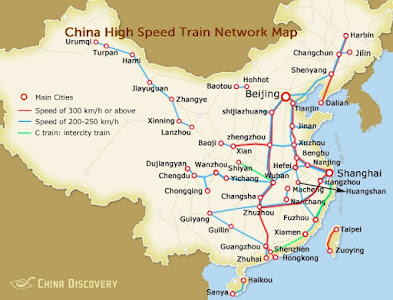
How network science assesses Hong Kong's high speed railway?


On September 23, 2018, Hong Kong celebrated the opening of its high speed railway that has been described by government officials as the most beneficial infrastructure project for Hong Kong.1 The $11 billion dollar project indeed provides an alternative mode of travel to major cities in the Chinese Mainland, and according to the government's prediction is expected to hit a daily passenger volume of 80,000 (which was recently downward adjusted). The question, however, is whether it really justifies the huge construction cost and the subsequent expensive maintenance cost.

Network science, a rapidly growing discipline in physics and mathematics, may shed light on the pros and cons of Hong Kong's high speed railway as a means for connecting with the rest of China. A railway system is a network, which is characterized by a set of so-called nodes connected by links. For a railway network, a station is a node, and its importance may be measured by a few parameters, among which the "degree" of a node is often used to assess its connectivity. In non-technical terms, the "degree" of a station is just the number of other stations it connects immediately with. A high-degree station is what we normally refer to as a hub, like Shinjuku in Tokyo, King's Cross St Pancras in London, or Wuhan in China. Obviously, a hub will always attract a large volume of traffic as it radiates and connects to multiple nodes. In a railway network, the majority of nodes has a degree of two, connecting only two neighboring nodes. A few, however, has a high degree.

According to the latest railway map2,

  • Degree of Guangzhou = 7 (double links counted as 2)

  • Degree of Shenzhen = 5

  • Degree of Hong Kong = ?


How about Hong Kong? It has the least degree, i.e.,
one, as it is situated at the end of a line. Unless such a node has other fundamental attributes that make it more important than others, it cannot be an important node from the network's point of view. In network science, the so-called weight of a node may make it more important, like the points-of-interest, population size, social activities, financial activities, etc. Hong Kong, being a Special Administrative Region, may have a heavier weight, but the Hong Kong high-speed railway station is topologically a terminal node and can never serve to connect others. This remains a fundamental constraint, unlike Hong Kong's airport which has been developed to be a hub. The key point is that the railway system, restricted by topology, cannot allow any station to develop into a hub if it was not designed for such a function.

Hong Kong is a one-degree node connecting permanently with an intermediate Futian station which then connects to Shenzhen North station, and that's it. Theoretically, the topological efficiency (node's) is also inherently low as it is located on one single route and right at its terminal. Other network attributes will also consistently rate Hong Kong's station as a less important node, e.g., the so-called betweenness centrality that reflects a node's ability of carrying passengers through it from various possible itineraries.

Hong Kong as a terminal station in the high-speed rail system is an inherently unimportant node. The high-speed railway is expected to play a very limited role as a means of transportation. Simply put, it connects only to Shenzhen, through which to other nodes serially (along one-dimensional lines). Under the current topological constraints (i.e., HKSAR being a boundary point, without through traffic), Hong Kong's high-speed rail has no room for further development. A literal dead-end so to speak!

September 26, 2018

Monday, August 13, 2018

Three Treasures from the Treasure Island 寶島三寶

If I have to pick the best three things from Taiwan, I would say in less than a blink of an eye:

  • Sunny Hill's pineapple cakes (微熱山丘鳳梨酥) 1 ;

  • Ali Shan's Zhuowu coffee (阿里山卓武咖啡) 2 ;

  • Kavalan Solist Sherry Cask Whisky (噶瑪蘭單一麥芽雪莉桶威士忌).


Sunny Hill's Pineapple Cakes


The pineapple cakes from Sunny Hill are unconventional and full of surprise. First, they are not compliant with traditional geometry, being rectangular rather than square in shape. The golden crust shell is like an elegant jewellery box that makes you feel curious of its content. The real surprise comes when you take a hard bite into the filling. Unlike all other pineapple cakes which are basically sweet winter melon fillings, this Sunny Hill specialty is absolutely pineapple! A sourish and fresh taste of pineapple emerges from the firm but not stiff pastry shell and gets punched up by the subtle buttery crust. Absolutely the best pineapple cake!


Zhuowo Coffee


The popular Taiwanese folk song "young ladies from Ali Shan are as tender as water, and young men from Ali Shan are as strong as mountain" is the best description for Zhuowu coffee from the Ali Shan region. This single-origin coffee demonstrates both tenderness and strength. Drinking Zhuowu coffee is a totally different kind of coffee experience. You don't even expect an aggressive aroma filling the pantry while the brewing is done. The first sip of a carefully dripped Zhuowu coffee is mild and tender like Chinese tea, but the strength gradually comes toward the end of the cup, and its amazing earthy scented aftertaste punches through your palate and gets registered in your mind! Absolutely unforgettable!


Kavalan Whisky


Kavalan, or "Gemalan" (噶瑪蘭) as pronounced by the local people, is the aboriginal name for Yilan (宜蘭). Accessibility to the superb quality spring water from the Central Mountain (中央山脈) and the Snowy Mountain Range (雪山山脈) is one of the key factors for Kavalan's success in whisky making. The seriously made single malt whisky matured in Sherry Cask has a distinctive dark color and fantastic smell of lychee, mango, cinnamon and berries! I usually prefer smelling whisky than drinking it because the strong alcohol kick always overpowers and somewhat counteracts the smelling pleasure. But this Kavalan whisky is a rather different breed. It gives the nose and mouth the right balance of fruitiness, spice and alcohol. An utterly delicious whisky!


August 14, 2018

______________ 

References:1 Sunny Hill's pineapple cakes in Hong Kong(CitySuper, Shop 3001, Level 3, Harbour City)2 Review of Zhuowu coffee3 Special thanks to Mr Lance Chan of Cafe Solé at Songshan Cultural and Creative Park (松山文創園區), Taipei, for introducing Zhuowu coffee to me.

Recent Popular Post